Before the Gates Close - A Short Story by Haley Anne Laughlin

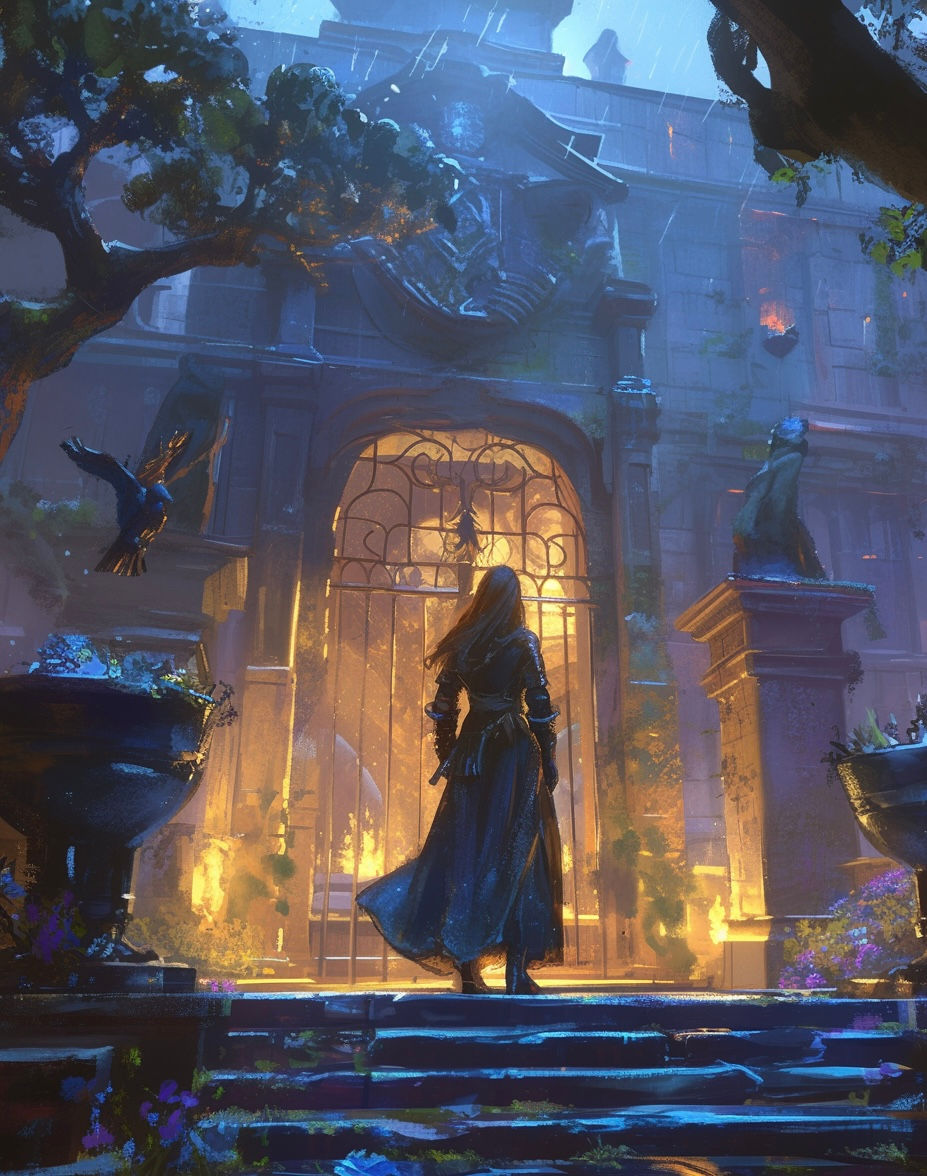
The first time I died, it was an accident.The second time, I saw it coming.
I felt it in the air—heavy, inescapable, thick with the kind of stillness that warns animals to flee. It wrapped around me like a noose, tightening with every breath, as if the world itself was holding its silence for the inevitable.
But an accident is a mistake—a flinch, a misstep, something no one expects. Coming death, though? That’s a promise. A shape etched into fate before it ever touches skin.
And as I stood there, watching it approach, I realized something.
I wasn’t afraid.Because this time, dying wasn’t the worst thing that could happen.
Letting them win was.
The courtyard stones were still damp with yesterday’s rain, slick and gritty underfoot. The smell of wet moss clung to the ground, rising in waves with each dragged step. They didn’t care. They pulled me anyway—through the filth, through the silence—my slippers snagging on broken grout, the hem of my dress growing heavier with every smear of mud.
I didn’t struggle. Not this time. There was no dignity left in the fight, only the knowledge that they wanted to see me crawl. I gave them stillness instead. The last time I did, they dislocated my shoulder and called it resistance.
This time, I kept my eyes forward.
At the end of the courtyard stood the gate tower, and beyond it, the steps. Fourteen of them. I’d counted when I was twelve, back when I still believed this place could be survived. Now, every one felt like a tally mark carved into my spine.
They wanted me to kneel.
I didn’t.
He was there—Sir Evran. General Velius would have walked through fire for his wife. Evran wouldn’t even look at me. His hand rested lightly on his sword hilt, but his gaze stayed fixed on the horizon, as if the execution of a girl who once poured his wine wasn’t worth his attention.
It was better this way. I didn’t want mercy. I wanted them to see I remembered.
He stepped forward only once—when the chain caught on my wrist and jerked too hard. Just a flicker: his jaw, the twitch of his fingers. But he said nothing.
No one did.
The priest droned through the indictment. Theft. Sedition. Impropriety. All words men like them used when a girl remembered too much and stayed silent too long.
“You may kneel,” the priest said.
I didn’t.
A murmur rippled. My knees already burned from the stone, but I stood taller, chin lifted. If this was the end, I wouldn’t make it easy.
“You’ll regret this in the afterlife,” the priest snapped.
“I don’t believe in yours,” I said.
That made them stir.
Evran’s jaw clenched. I hoped he heard me. I hoped it followed him into his sleep the way I used to.
Because the first time I died, I begged. I was still soft then—pliable, naive. I thought if I cried hard enough, someone would stop it. I thought if I apologized, they’d change their minds.
They didn’t. They just made sure it hurt more.
They say people don’t remember the girls who are only tolerated.
But he did.
Once.
I wasn’t a servant. Not truly. I was born to a minor house—respectable, educated, no great wealth but enough pride to wear a sigil. After the treaty, that stopped mattering. My father’s name was stricken, our lands carved up like meat.
They sent me to the capital as an oath. A political orphan dressed up like a noble guest. But inside the citadel, titles meant less than silence, and I was more valuable quiet. So I poured wine. I smiled. I vanished when dismissed.
I remember the first time I saw him bleeding.
He came back from the border—armor torn, blood soaking his leg. He waved off the healers. Sat by the barracks fountain. Tried to sew himself shut.
I brought water.
Not because I was told. Because I saw him. And because I knew what it meant to hurt where no one could see.
“You’re not afraid,” he’d said.
I was. But not of blood. And not of him.
The priest kept speaking, reciting charges with false gravity. Treason. Defiance. Disruption of morale.
It was always about morale. No one likes a girl who survives the first execution attempt.
A crow landed on the wall. Loud. Watching.
One guard twitched. Evran looked up.
That was the first crack.
His eyes met mine. Just once. Not pleading. Not hopeful. Just there.
He used to say I had eyes like someone waiting to be wronged.
The wind shifted. A guard’s armor chimed out of rhythm. The priest faltered.
Then a page ran into the courtyard, breathless. He whispered something into the captain’s ear. Quick. Urgent.
The captain didn’t reach for his sword.He reached for the scroll tucked into his armor.
And the story wavered.
I was still bound.
Still branded.
But the ending wasn’t certain anymore.
The scroll shook in his hand.He didn’t read it aloud. Just scanned, twice. Then looked up—not at me.
At Evran.
Evran didn’t move. But his fingers twitched once at his side, a reflex he caught too late. For a moment, his gaze dropped to the ground between us, as if weighing a decision he’d already made. When he looked up again, something behind his eyes had settled, sharp as a blade.
“Your execution is postponed,” the captain said. “By order of the Crown.”
A hush fell.
No applause.
Just disbelief.
No one asked why. No one wanted to admit they were pawns.
The cuffs came off clumsily. One guard dropped his key.
I didn’t flinch.
Evran approached. Not to help. Not to speak. Just to exist, again, too close.
“You planned this,” he murmured.
Not a question.
I smiled. “Did you think I’d die the same way twice?”
He said nothing. But when I passed him—free, filthy, breathing—he turned to follow.
They didn’t ask where I was going.
No one dared.
The priest closed his ledger like this had been a scheduling error. The guards looked at their hands. The crowd drifted away.
Evran walked behind me. Not close. Not protective. But present. His boots scuffed once against the stone, like he almost missed a step—or caught himself from making one. I didn’t turn to look, but I felt the shift, like the air between us had thickened. Not enough to change the past. Just enough to question the future.
Maybe they thought I’d be taken somewhere quiet.Maybe they thought this was still mercy.
Let them.
The last time I left, I was dragged. Broken. Silent.
This time, I walked.
My wrists were raw. My legs ached. But I walked.
And as the gates closed behind me, I didn’t look back.
Not at the courtyard.
Not at the priest.
Not at the ones who swore I wouldn’t survive again.
I already knew the truth.
The first time I died, it was an accident. The second, a warning.
The next time?
It'll be a war.

Comments